

There are many successful examples of land valuation and land value taxation, which critics don’t engage with.
Andy Burnham, mayor of Greater Manchester and widely seen as a potential challenger to PM Keir Starmer from within the Labour party, has been making a lot of noise lately about how land in the UK is significantly “undertaxed,” thereby bringing Land Value Tax (LVT) back into the UK news cycle.
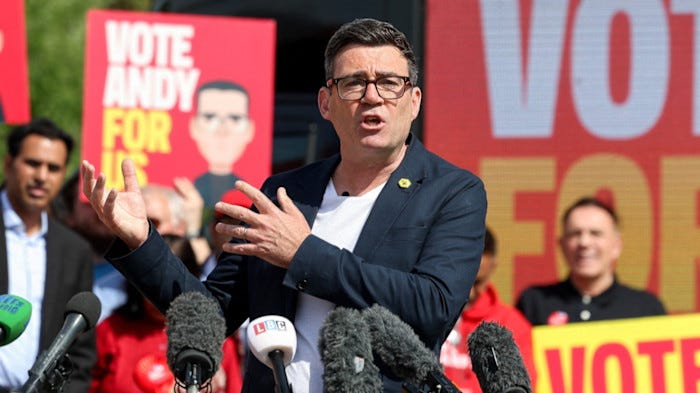
I haven’t formed any opinions yet about Mr. Burnham or the finer details about his specific policy designs, but I do have an opinion about something else that regularly makes the rounds on social media whenever LVT makes headlines in the UK: Sam Watling’s article in Works in Progress magazine from last March, “The failure of the land value tax,” frequently invoked on social media as a slam-dunk refutation of any proposed LVT reform in the UK, and indeed, anywhere else.
Watling’s article recounts the rise and fall of the 1909/1910 “People’s Budget”, which included an aggressive push for Land Value Tax under the British Liberal party that ultimately failed. From this one historical case study, Watling draws the broad conclusion that LVT was not just an ineffective policy, but an actively dangerous one.
I will happily grant Watling’s first premise, that Lloyd George’s Liberal party failed to enact an effective and lasting Land Value Tax in the UK in the 1910’s, but my agreement with Watling ends there.
Watling’s argument is that the LVT implementation was botched, not because it was implemented poorly, but because “pure land value tax is chimerical” and therefore can’t be implemented. He goes on to assert falsely that “a pure tax on the unimproved value of land has never been successfully implemented anywhere.”
There are three major issues with Watling’s argument: first, he over-generalizes from one century-old anecdote to make provably false claims about all LVT implementations everywhere. Second, he glosses over the intense historical and political turmoil that afflicted Britain in the 1910’s and makes little effort to untangle these confounding forces with the LVT he seeks to pin all the Liberals’ failures on. Third, he zeroes in on the “utopian” maximalist goals of historical LVT advocates as a convenient target, and then expects the audience to simply assume this has much to say about modern LVT reforms, which are centered around much more modest and pragmatic, incrementalist reforms like split-rate property taxation.
As fellow substacker Darren Iversen has already written a corrective to Watling’s historical claims, we will focus our efforts on the economic ones.
Read the rest on Progress and Poverty’s website here: https://progressandpoverty.substack.com/p/contra-watling-on-the-failure-of